
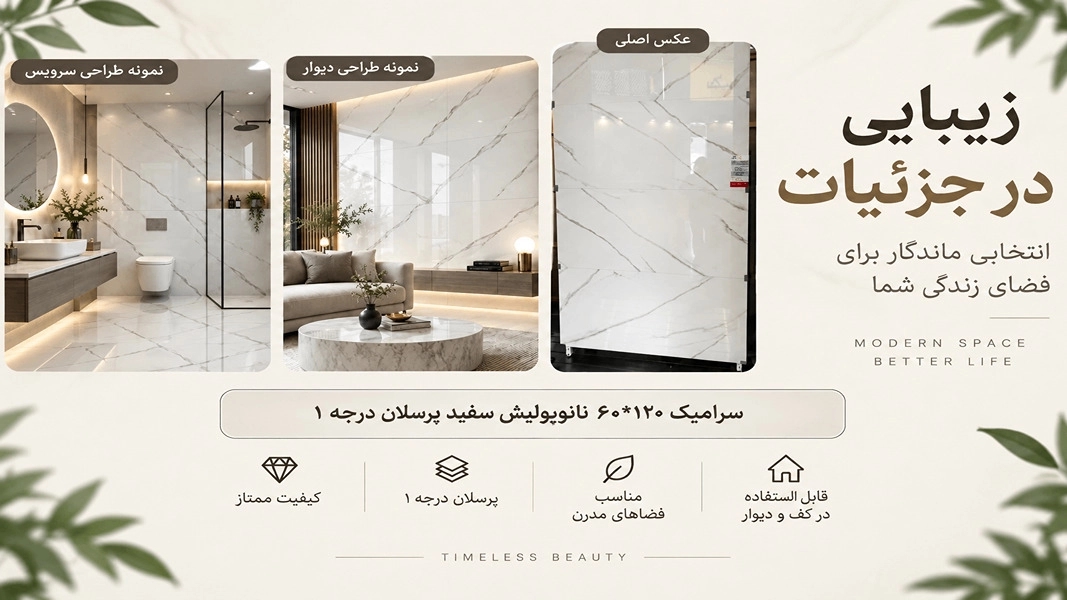
Ceramic tiles are one of the most widely used materials in interior design and modern construction. A great variety in design, color, dimensions and type of surface has made it possible to use ceramic tiles in different parts of the building, from the reception and kitchen floor to the bathroom, toilet, terrace and even some outdoor spaces with complete confidence. The smart choice of ceramic tiles is not only limited to its appearance. Construction quality, quality grade, water absorption rate, wear resistance, type of surface finish, tile dimensions and exact place of use are among the most important factors that should be considered when buying ceramic tiles.
For example, the ceramic that is chosen to cover the bathroom wall will not necessarily be a suitable option for the floor of the same space. The floor of the bathroom and toilet always needs a product that, in addition to the strength of the body, has a non-slip surface and safety for everyday traffic, according to the humidity conditions of the environment.
For example, the ceramic that is chosen for the wall of the bathroom is not necessarily the right choice for the floor of the same space. The floor of the bathroom and toilet needs a product that, in addition to the appropriate resistance, according to the environmental conditions, has a suitable surface for use in a wet environment to minimize the risk of slipping and show sufficient stability against acidic and alkaline detergents.
What is the difference between ceramic and tile and what are their characteristics?
Tiles are mainly produced from clay with higher porosity and are fired at a milder temperature. For this reason, they are lighter in weight and are used for wall covering in construction projects. The high variety of designs, colors and glazes in all types of wall tiles allows creating unique and eye-catching decorations.
On the contrary, ceramic types are produced with higher body density, denser soil and at a much higher temperature. This feature makes ceramics more resistant to pressure and wear and is an ideal option for covering the floor of buildings and high-traffic or wet environments. Of course, the final decision should not be limited only to the name of the product; Rather, the technical specifications of the catalog and the consumption category determined by the factory are much more important.
On the other hand, types of ceramics with appropriate technical specifications can be used to cover floors and environments that are exposed to more traffic or humidity. Ceramics are fired at a higher temperature than traditional tiles, which gives them higher molecular density, higher mechanical resistance, and less water permeability.
One of the most popular and modern options in today's construction projects is porcelain ceramic. Due to the production process under extreme pressure and firing at a temperature exceeding 1200 degrees Celsius, porcelain has an extremely dense structure and its water absorption rate reaches less than half a percent. For this reason, it has great resistance to temperature fluctuations, impact and chemical detergents.
What is porcelain ceramic and what are its advantages in modern architecture?
Porcelain is produced in various designs such as stone, marble, concrete and wood. For this reason, it is possible to create a luxurious and modern space without using natural stone. In addition to reducing construction costs, this feature also significantly reduces dead loads on the building structure.
In addition to color coordination and harmony with the decoration, in choosing the ceramic for the reception floor, attention should be paid to things such as the durability of the glaze, ease of cleaning, the amount of light reflection and the proportion of the size of the ceramic to the size of the environment.
Guide to choosing the best ceramic for the reception floor
In modern houses, the use of large-sized ceramics and laser cutting or surface rectification shows without wide seams. The basic installation of this category of products requires a completely level substrate and the use of standard porcelain glue to ensure the strength of the work.
Stone and marble design ceramics are common choices for luxury decorations. Bright colors such as white, cream, bone and light gray can also make the space appear more open and bright. These colors reflect the ambient light and are a strategic choice for apartments with limited area or less light.
Bathrooms and toilets are one of the parts that should be paid the most attention to when buying ceramic tiles; Because constant contact with moisture and water imposes special conditions on the space.
Choosing ceramic tiles for bathrooms and toilets
The combination of bright marble design ceramics with natural veins, along with modern built-in faucets and basic lighting, create an eye-catching and relaxing atmosphere in the bathroom.
For the bathroom floor, it is better to choose a product that is designed for use in wet environments and floors. Ceramics with matte or semi-matte glaze (sugar effect or porcelain with fine texture) prevent the creation of a slippery surface after water falls and ensure the safety of residents. For the walls, there is more freedom in choosing the design, color and type of surface, and you can use glossy and super polished glazes to reflect light and wash faster.
In the kitchen environment, resistance to staining and quick cleaning is the first priority. For the walls between the cabinets, it is necessary to choose tiles with grease and heat resistant glaze to be cleaned with the simplest detergents.
For the kitchen floor, ceramic with standard abrasion and slip resistance is recommended. Harmonizing the color theme of the floor ceramic with the material of the cabinets creates a unique visual balance in the heart of the house.
Key points when buying ceramic tiles
Careful inspection before purchase prevents incurring rework costs. Before placing an order, always evaluate things such as suitability of the product for use on the floor or wall, quality category, friction coefficient, glaze resistance against scratches and moisture penetration. Accurate calculation of the square footage and provision of about 10% of surplus material eliminates the risk of deficit caused by cuts or future repair needs.
For the wall between the cabinets, tiles with a washable surface can be used; While for the kitchen floor, a product suitable for the use of the floor should be selected. Inter-cabinet tiles with small dimensions, brick-like forms, Moroccan designs or integrated marble slabs are all practical options for the back wall of the sink and stove.
Tile and ceramic, as the main materials for covering spaces, play a key role in the technical durability and aesthetic effect of the building. Knowing the difference between ceramic and tile, choosing porcelain for environments exposed to water, and paying attention to the quality of the surface will guarantee the durability and visual value of your home.
Types of finishing and type of ceramic surface
The type of ceramic surface finish has a direct effect on the use and effect of the environment. Common level categories include:
Glossy and super-polished ceramic that gets a completely shiny and mirror-like surface with mechanical polishing and is suitable for large halls and luxury walls. This type of surface has a very high light reflection and makes the space look brighter.
Matte ceramic that does not reflect light, shows less scratches and stains and is ideal for floors in high-traffic spaces, bathrooms and restrooms with a minimal and neoclassical style. Sugar matte and rustic ceramic, which has small prominent textures and provides excellent friction against slipping in wet and outdoor spaces such as balconies and yards.
Summary
Choosing only based on appearance can make you buy a product that is not suitable for the intended space. Before buying, it is better to check the installation location, the amount of traffic, the humidity of the environment, the technical specifications of the product, the dimensions, the type of surface, the color and the style of decoration.
Checking the product's quality grading (grade one, grade two, etc.) guarantees the smoothness of the edges, lack of durability and uniformity of the glaze. Buying calibrated or rectified (precision laser cut) ceramics will minimize banding and create a completely integrated, modern look. It is always suggested to order 5 to 10% more of the project size due to overturning, side cuts and breakages during installation, so that in case of deficit, there will be no difference in the color number (caliber and tonnage) with subsequent purchases.
The wall tile has higher porosity and less weight and is only suitable for the wall, but the floor ceramic with high density and more wear resistance is used for the floor.
The wall tile has higher porosity and less weight and is only suitable for the wall, but the floor ceramic with high density and more wear resistance is used for the floor.
Yes, porcelain ceramic is the most ideal coating for the bathroom due to its water absorption of less than half a percent, provided that the surface is matte or non-slip.